How to Know If Online Therapy Is Right for You
By Crystal Riley, LCSW
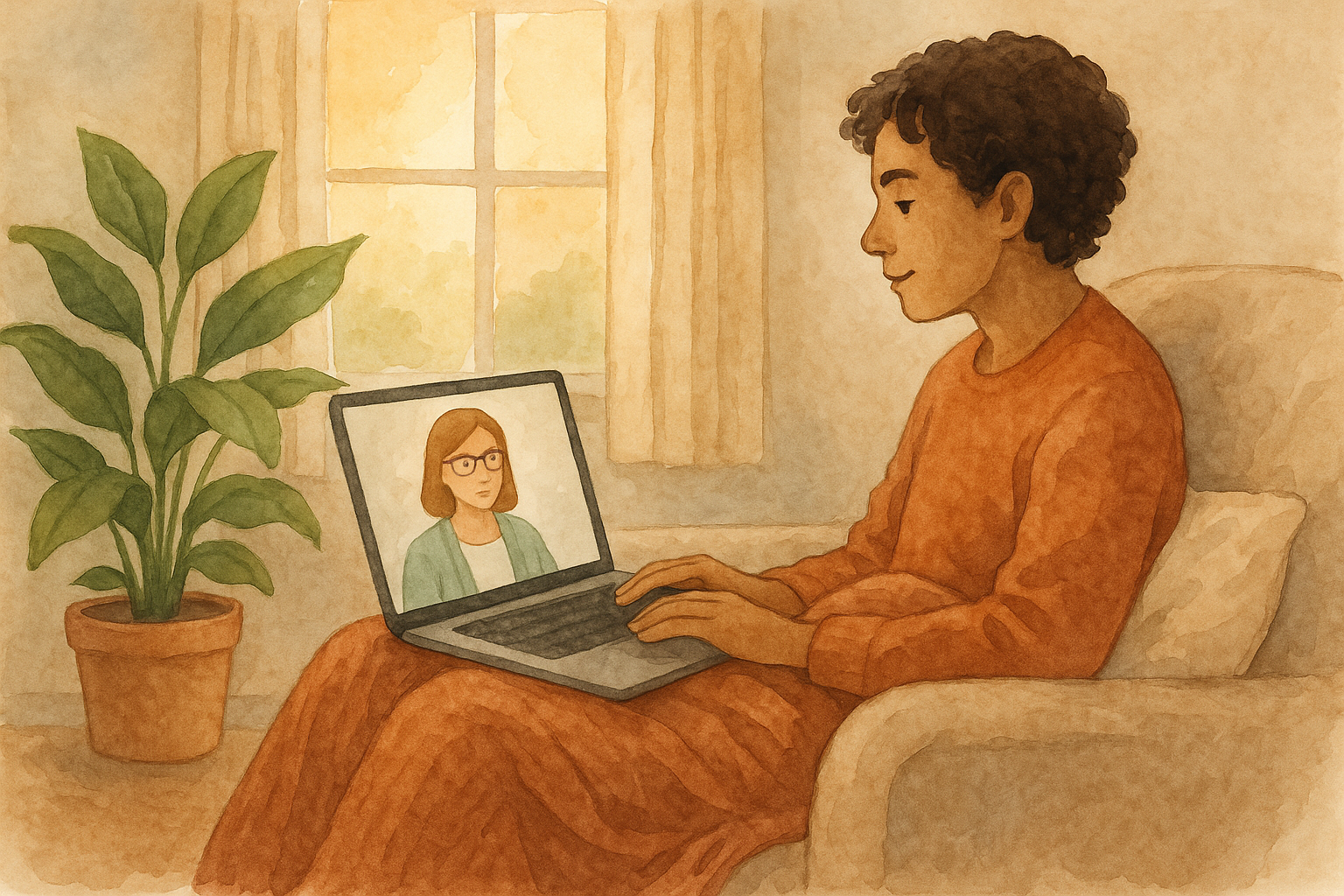
Therapy used to mean one thing: sitting in an office, across from a therapist, once a week. That's still an option, but it's no longer the only one. Online therapy has made mental health support more accessible than ever. But is it the right fit for you?
Here are some things to consider.
What Online Therapy Actually Looks Like
Online therapy is a live session with a licensed therapist, just like in-person therapy. The difference is that it happens over secure video. You log in from wherever you're comfortable, whether that's your living room, your car on a lunch break, or a quiet corner of your home.
It's not texting with a chatbot. It's not a self-help app. It's real therapy with a real person.
Online Therapy Might Be a Good Fit If...
- Your schedule is packed. No commute means less time away from work, kids, or other responsibilities.
- You feel more comfortable at home. Some people open up more easily in their own space. That's completely valid.
- You live in a rural area or have limited local options. Geography no longer has to limit your access to quality care.
- You have mobility challenges or chronic health issues. Getting to an office can be a barrier. Online therapy removes it.
- You travel frequently. Sessions can happen from anywhere with a stable internet connection.
Online Therapy Might Not Be the Best Fit If...
- You're in crisis or experiencing a psychiatric emergency. In-person or emergency services are more appropriate in those moments.
- You don't have a private space at home. Therapy requires confidentiality. If you can't speak freely, the experience suffers.
- You prefer the ritual of going somewhere. For some people, physically traveling to an office creates a helpful boundary between "therapy time" and regular life.
It's Not All or Nothing
Some people start with online therapy and later switch to in-person. Others do the opposite. Some mix both depending on the week. There's no single right answer. What matters is that you feel supported, heard, and comfortable enough to do the work.
What to Look For in an Online Therapist
- Licensed in your state (this is required by law, not optional)
- Uses a secure, HIPAA-compliant platform
- Offers a free consultation so you can see if it's a good fit before committing
- Specializes in what you're dealing with, whether that's anxiety, depression, relationship issues, or something else
The Bottom Line
Online therapy isn't better or worse than in-person therapy. It's a different format. The most important factor in successful therapy has always been the relationship between you and your therapist, not the medium.
If you've been thinking about starting therapy but something has been holding you back, online sessions might be the thing that makes it possible.
You deserve support that fits your life, not the other way around.
Wondering if online therapy could work for you? Schedule a free consultation and let's find out together.